



Operations6 min read
Stor-Mor
See how Stor-Mor successfully scaled from manually tracking leads on spreadsheets to managing over 300 dealers.
Mike Cocozza bid $2.4 million to build a custom home. The other builder came in at $2.1 million. The client told Mike he had no doubt Trinity would deliver the better product, service, and experience. Then he asked whether that was worth an extra $300,000. Mike's answer was to take him shopping.
That's the far end of a problem you deal with every week. You've got a premium line on the lot, and you know it's the better build. Then a customer walks in with a quote from down the road that's $500 cheaper, and you're in a negotiation you didn't want.
Mike's company, Trinity Custom Homes, builds luxury custom homes in Sarasota, Florida. His bid is often the highest in the room, and he wins anyway. On this webinar, Shed Suite CEO Jason Graber asked him three things. How he attracts premium buyers, how he handles the cheaper bid, and how he decides which clients to take. This post organizes his answers for a dealer or manufacturer selling $8,000 to $30,000 builds. The price tags are different. The sales conversation isn't.
The full recording is embedded below. The written guide continues after it.
Run the business so people want to refer it
Mike's answer to "how do you attract premium buyers" starts before any marketing. He knows contractors have a reputation problem, and he built Trinity to be the exception. Every process in the company is open to the client. Nothing is hidden.
He holds his subcontractors and vendors to the same standard he holds himself. His dad's line was to build every house like you're building for your mother. Mike extends it: treat your subs, your vendors, and the guy cleaning up the job site the same way. You get more out of every project, and every one of those people becomes a referral source.
The survey
Mike surveyed his past clients to find out how they heard about Trinity and what tipped the decision. The result: about 80% were referred by an architect or a past client.
That number changed how he spends. "We can spend all of the marketing dollars in the world, that's not gonna move the needle for us as far as actually getting that client to close a deal."
Ads and social are the second look
He still runs social and print, but he's clear about the job they do. They're the secondary validator. A prospect hears the name from an architect, then checks the website, the YouTube channel, and the social feeds. If those hold up, the prospect makes the call.
Mike's rule: figure out your most important channel and take care of it first. Everything else supports it.
What this means on the lot
Jason hears the same thing from high-performing dealers. They've told him 40 to 50% of their deals come from referrals. A customer bought a shed, told a buddy, and the buddy showed up. Your website and your Facebook page exist so that buddy can confirm the recommendation.
Why is he $300,000 less?
Back to the $2.4 million house. It was pre-COVID, and the client had walked Trinity's projects and talked to past clients before he asked his question. Mike told him he was asking the wrong one.
"The question isn't why are we three hundred thousand dollars more, the question is, why is he three hundred thousand dollars less?"
Mike had taken notes on every walkthrough. Cabinets, countertops, appliances, plumbing fixtures. He priced the house the client described. The other builder priced a base model. In Mike's words, the client asked for a 911 Turbo S and got a bid for a base 911 Carrera.
Then he proved it. He took the client shopping. Every selection landed within half a percent of what Mike had priced. The client took the list back to the other builder and came back a week later asking for a contract. What he'd found out: getting what he actually wanted from the cheaper bid would've cost another $296,000.
An honest number beats a low number
Mike accepts the reputation of being the more expensive builder. "In my impression, we're just being honest."
The reason isn't pride. It's referral math. "I cannot be a winner if I tell you I can build you a house for 1X and we cross the finish line at 1.3X." If 80% of his next clients come from past clients, a client who went over budget is a lost lead source. It doesn't matter how good the house turned out.
"We need to be looking at our client, not only as a client that we're serving, but also as our next salesperson."
You control more of the price than you think
Jason raised the obvious objection: a lot of dealers don't set the price or the quality. Mike pushed back. The dealer controls the conversation, and the conversation drives the price.
A custom home is hundreds of decisions that add up to a number. A shed is a shorter list, but it's the same kind of list:
A buyer who wants the cheapest shed and says he doesn't care if it only lasts two years can have bright nails and spruce. A buyer who says "I want this shed to last me 20, 30, 40 years" needs to hear the other list. Your salesperson should know it cold.
Sell what they need, not what they walked in asking for
Most shops already carry an economy line and a premium line. So the fix isn't a new product. It's a better first conversation.
Mike's approach if he ran a shed business:
"Sell them what they actually want, what they need, but you can't get there without a conversation."
Shed Suite gives your team the leads, follow-up, and order pipeline this article describes — all in one place, trusted by 2,800+ shed businesses.
Book a DemoSell the process, not the photos
Mike's competitors lean on photos and video. He doesn't. "Anything looks great in a photo." Then you walk the house in person and start seeing the flaws.
His pitch is a walkthrough of Trinity's systems and processes. Most of his clients are executives and entrepreneurs, and those people got where they are by valuing systems. When they see a builder who's written the process down, they trust him with the build.
Jason's translation for the lot: after the customer picks the shed and the colors, tell them what happens next. In his example, production takes two to three weeks. They'll get a call to schedule delivery. Here's what they need ready: a clear entry, access to the backyard, blocks to level it. Customers eat that up, because it shows you've thought through all of it. Any buyer, at any price, relaxes when the business has its ducks in a row from the sale through the delivery.
The two-way interview
Mike ends every first meeting the same way. He thanks the prospect for considering his firm, acknowledges they're interviewing other builders, and then reminds them it's a two-way interview. He needs to know they're the right fit too.
The reaction sorts them. A prospect who looks offended is showing you the client they'll be. The good ones stop and say the same thing every time. That's smart, because we're going to work together for years. We need to know we fit.
His ideal client profile, which he built with a business consultant through his C12 CEO group:
A customer with questions is a customer you're underserving
Mike calls this closing the loop. He keeps shopping on Amazon even as product quality slips, because he can read reviews, track the package, and return it easily. Other sites don't send a confirmation email or a tracking number, and you sit there wondering.
When a client keeps calling for updates, most businesses treat that client as a pain in the neck. Mike flips it: "What am I doing wrong to not serve this client well?" Questions are a symptom.
So he makes it a game. "How can I get this client not to ask me questions anymore?" Answer everything before it comes up, and the client takes a back seat and lets you work.
Mike's idea for the build wait: a short email at each step. "Hey, we put the roof on." "We're 15 days away." It keeps the customer excited instead of anxious.
Get ahead of the delivery
Mike guessed, correctly, that delivery is a shed dealer's biggest pain point. Torn-up lawns, broken sprinklers, a fence that has to come down, the wrong day.
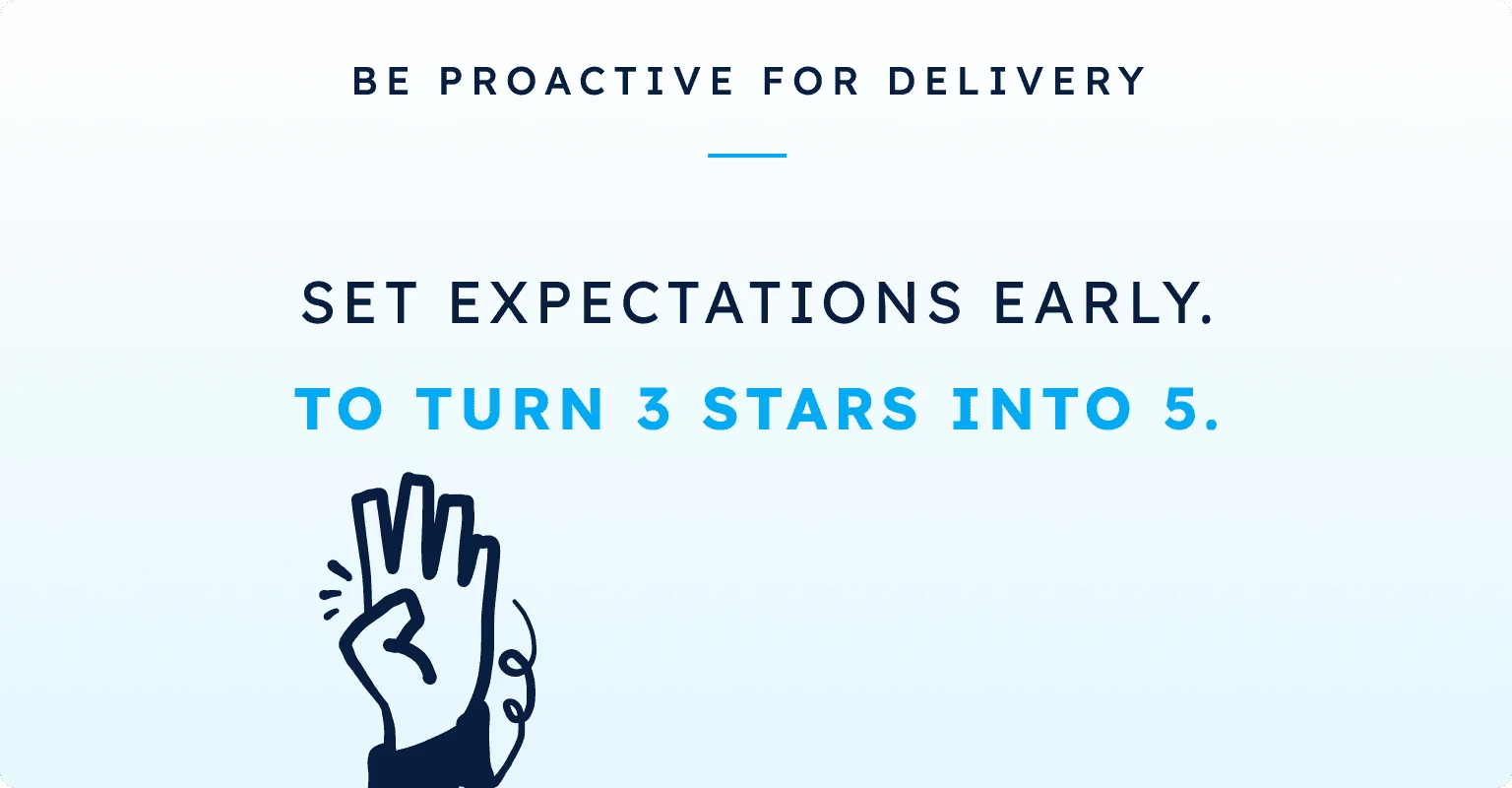
His fix is to set the expectation before the truck rolls:
Skip this and the customer leaves a three- or four-star review. They loved the shed and the sales process, but nobody warned them about the lawn. Do it and you get five stars.
Let every employee say yes
For bigger operations, Mike's push is culture. Make sure every person on the team can say yes to a customer. Not "I've gotta check with my manager, I'll get back to you."
Mike's wife is an interior designer. One furniture storage-and-delivery company she works with asks each designer for a set of branded polo shirts. When the crew shows up at the job, they wear the designer's brand, not their own.
Jason called this one of the shed industry's bigger challenges. A lot of deliveries run through independent haulers with their own truck and trailer, often hauling for two companies at once. They're contractors, but they're carrying your logo.
Mike's test: that hauler is at church, and someone asks him where to buy a shed. Your company's name should be the first one out of his mouth. It will be if you pay a little more, care about the work, and find a way to tell the client yes. "They don't have to be an employee to do that."
The same goes for every vendor down the line. If you're not working out how your culture reaches them, you're leaving referrals on the table.
The roof-is-on email and the delivery prep form are easy to promise and hard to keep up by hand past a few orders a week. Shed Suite keeps the order, build status, and delivery schedule in one place.
Mike's premium clients don't come from ads. They come from past clients and partners who trust him. They pick him because he prices the house they described, not the house that wins the bid.
None of that needs a $2.4 million budget. It needs a first conversation that finds out what the shed is for. Then an honest number for that shed. Then a process the customer can see from the lot to the backyard.
Next step: before your next premium quote, write down the five build decisions that separate your economy line from your best model. Walk the customer through them before you talk price.
Casey Wiggins ran a lot before he ran a shed factory. His playbook for turning a dealer from first contact into a partner who stays, and keeping them busy.
What a customer really costs, what a healthy return on ad spend looks like, where budget leaks, and how to show up when buyers ask AI instead of Google.
Toli Marchuk and Jason Graber on what an AI agent is, the two tools to start with, and the automations a shed dealer can switch on with no developer.
See how real shed businesses scale and simplify with Shed Suite.
See how Stor-Mor successfully scaled from manually tracking leads on spreadsheets to managing over 300 dealers.
See how Backyard unified their e-commerce sales, inventory, and delivery teams using Shed Suite's all-in-one platform.
See how Legacy successfully automated sales, simplified inventory management, and improved delivery tracking to scale seamlessly.
Shed Suite clients see an average growth of 81% in their first year.
See how we do it — book a 30-minute demo.
Average sales growth across all Shed Suite clients, the 12 months before vs. after joining Shed Suite. As of 2026.
“We come from the shed industry and built this for y’all. We’d love to show you what we do, how it works, and how it’ll make every team member’s life so much easier and smoother.”

Jason Graber
Shed Suite Founder