
Operations6 min read
Stor-Mor
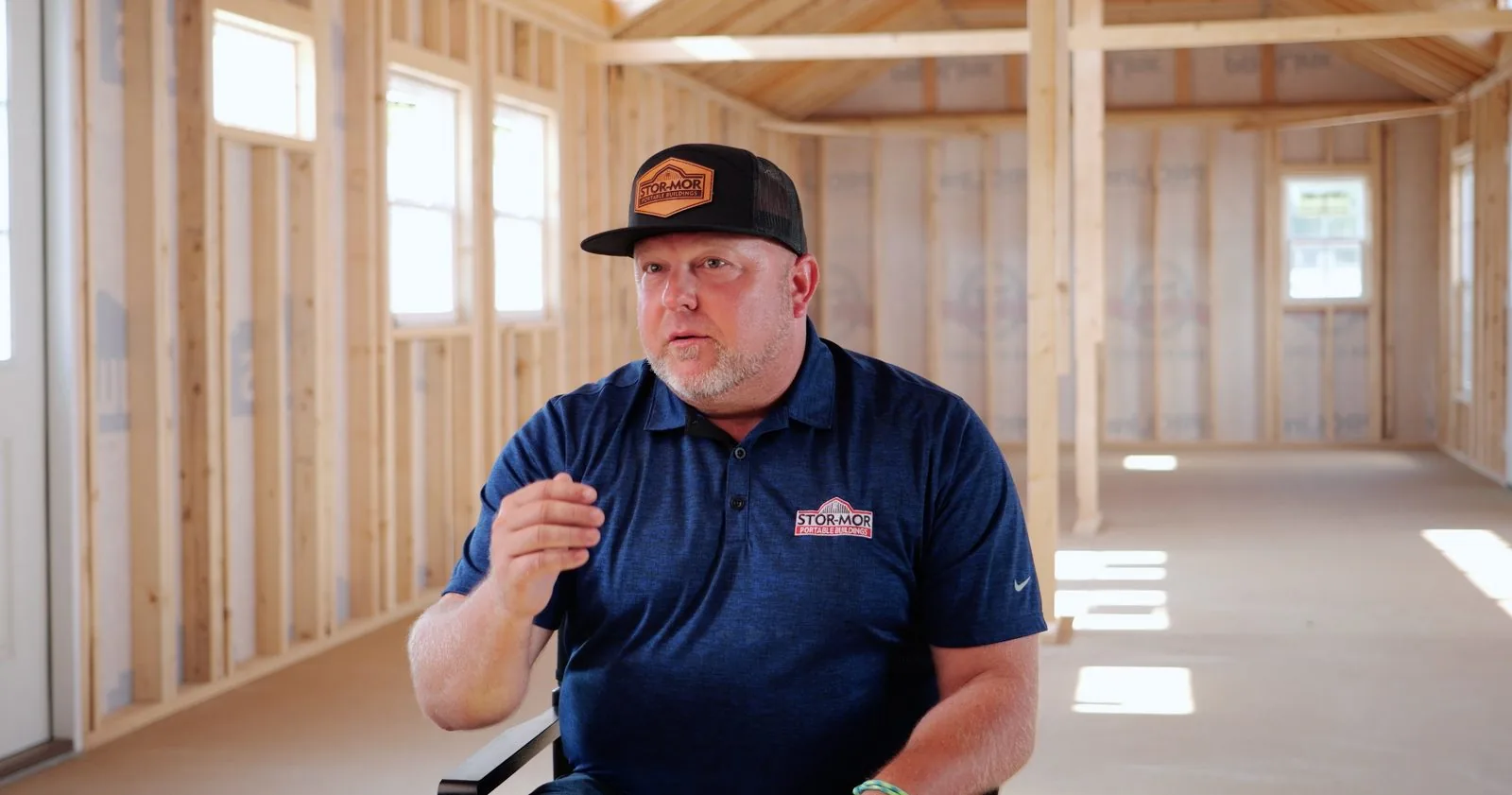
See how Stor-Mor successfully scaled from manually tracking leads on spreadsheets to managing over 300 dealers.
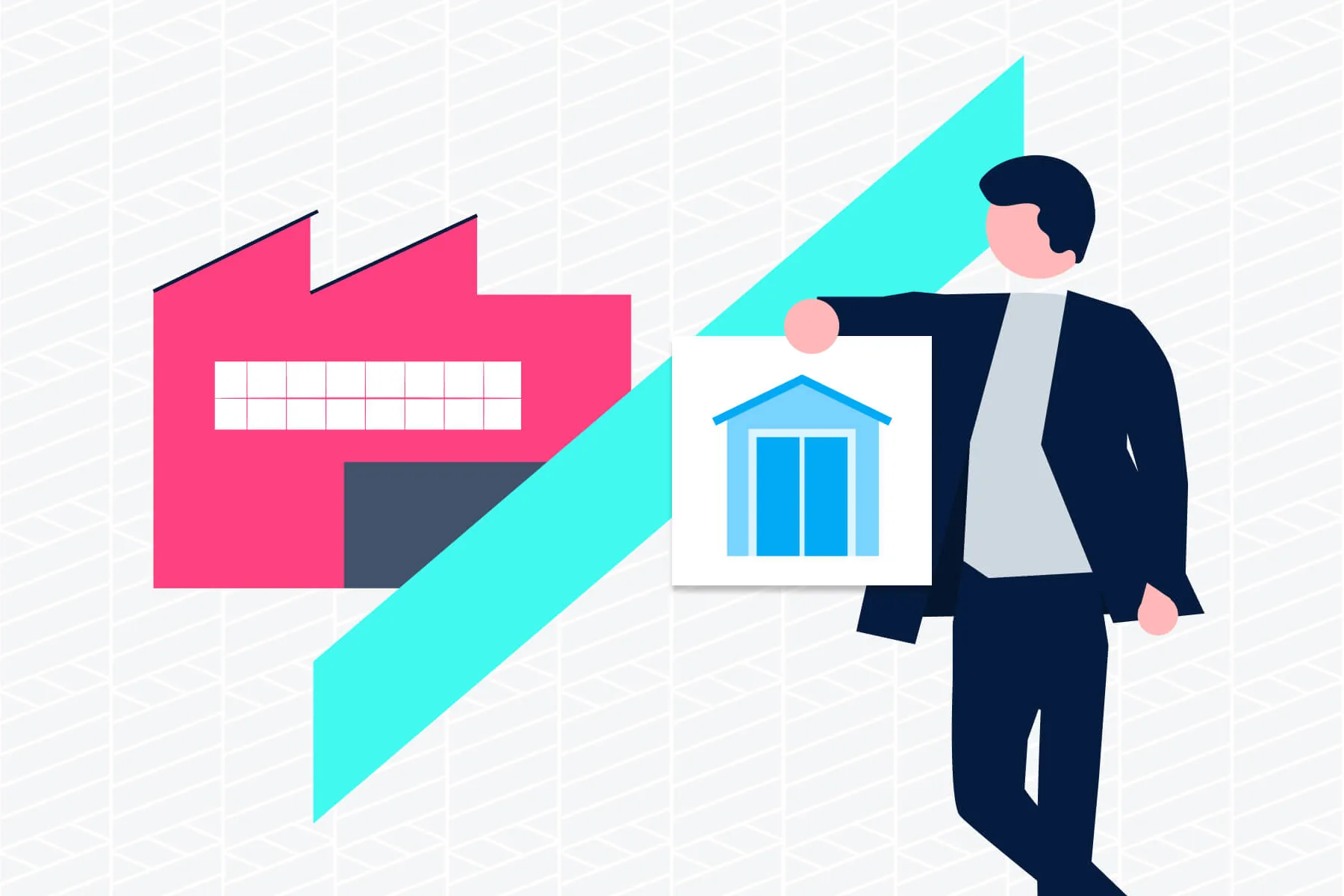
Welcome back to our extensive guide series on the shed industry! In this guide, we're honing in on the intricacies of two vital roles - manufacturers and dealers. As you delve deeper into the industry, you'll often find yourself standing at the crossroads, deciding whether to take on the role of a manufacturer, producing the sheds, or a dealer, selling these structures to the end user.
This guide aims to make that decision easier. We will walk you through each role, their pros and cons, and the significant considerations you need to factor into your decision-making process. Whether you're at the initial stages of starting your shed business or considering a change in your existing business structure, this guide is designed to provide valuable insights.
So let's dive in and unravel the manufacturer vs. dealer dilemma, and help you chart your path in the vibrant shed industry!
To begin, let's focus on the first vital role within the shed industry - the manufacturer. As a manufacturer, you'll be the creator of the product - you'll design and construct sheds, essentially setting the stage for the rest of the industry. But what does this role entail, and what are its advantages and disadvantages?
What Does a Manufacturer Do?
At its core, a manufacturer is responsible for producing sheds. This involves a range of tasks such as sourcing raw materials, designing shed models, and assembling the final product. Quality control, adherence to building codes and regulations, and efficient use of materials are all part of a day's work for a manufacturer. Manufacturers often have their own factories or workshops where production takes place.
Pros and Cons of Being a Manufacturer
Pros:
Cons:
Key Considerations
If you're considering becoming a manufacturer, there are several aspects you'll need to evaluate:
Remember, the manufacturer role is not just about making sheds; it's about business management, product innovation, and market understanding. It can be an immensely rewarding role, but one that requires substantial commitment and investment.
Now that we have a good understanding of the manufacturer's role, let's shift our focus to the dealer's perspective. A dealer acts as a vital link between manufacturers and customers, offering sheds for sale in a retail environment. However, this role comes with its unique pros, cons, and considerations.
What Does a Dealer Do?
A shed dealer is essentially a retail business. Your role would involve purchasing sheds from manufacturers, then marketing and selling them to customers. This process involves building relationships with manufacturers, managing inventory, setting up a showroom or online store, and providing excellent customer service. Dealers don't build sheds; they connect the people who do with the people who need them.
Pros and Cons of Being a Dealer
Pros
Cons
Key Considerations
If you're leaning towards the dealer role, consider the following:
As a dealer, your success will be determined by your ability to effectively market and sell sheds, manage relationships with manufacturers, and offer outstanding customer service. It's a role that requires a mix of business acumen, people skills, and an understanding of your local market.
Have you ever thought about enjoying the best of both worlds? A hybrid role, combining manufacturing and dealing, may be just the ticket for entrepreneurs who love the idea of making their own product and selling it directly to customers. Let's explore this unique pathway in more detail.
What Does a Manufacturer-Dealer Do?
As a manufacturer-dealer, you wear two hats. Firstly, you're the creator, building the sheds and ensuring they meet high-quality standards. Secondly, you're the seller, directly marketing and selling your products to customers. This combined role allows you to control the entire process, from creation to distribution, and provides an opportunity to maximize profits.
Pros and Cons of the Hybrid Role
Pros
Cons
Key Considerations
If the hybrid model piques your interest, consider these factors:
Choosing a hybrid role allows you to keep complete control over the quality, sales, and profits of your shed business. However, it also involves more investment, risk, and responsibilities. This role requires a unique blend of manufacturing knowledge, marketing skills, and entrepreneurial spirit.
Shed Suite gives your team the leads, follow-up, and order pipeline this article describes — all in one place, trusted by 2,800+ shed businesses.
Book a DemoAfter understanding the nuances of the manufacturer, dealer, and hybrid roles, it's time to weigh your options and make an informed decision. Several factors can influence your choice, so let's discuss these in detail.
Capital
Whether you're planning to become a manufacturer, dealer, or both, start-up capital is a significant consideration. Manufacturers generally require more capital due to the costs of setting up a production facility, purchasing machinery, and procuring raw materials. Dealers, on the other hand, primarily need capital for acquiring inventory and setting up a retail space. If you plan to adopt a hybrid role, the required capital will be even higher.
Skills
Each role requires a different set of skills. Manufacturers need to have technical knowledge about designing and producing sheds, while dealers need skills in customer service, sales, and marketing. The hybrid role requires both sets of skills, or a team that can cover all areas. Make an honest assessment of your skills, and consider how you can bridge any gaps.
Market Demand
Understanding the local market demand for sheds is crucial. Research to ascertain the volume of demand, type of sheds preferred, and price ranges consumers are willing to pay. Market demand can affect both the profitability and the viability of your business, irrespective of the role you choose.
Competition
Evaluate your local and online competition. If there are many manufacturers or dealers in your area, entering the market could be challenging. However, competition also signals a demand for sheds, which is a positive sign.
Business Goals
Your long-term business goals also play a critical role in deciding your role. If you want to create a unique brand and have full control over the product, becoming a manufacturer or adopting a hybrid role could be preferable. If you're more interested in sales and customer interactions, being a dealer might be more suitable.
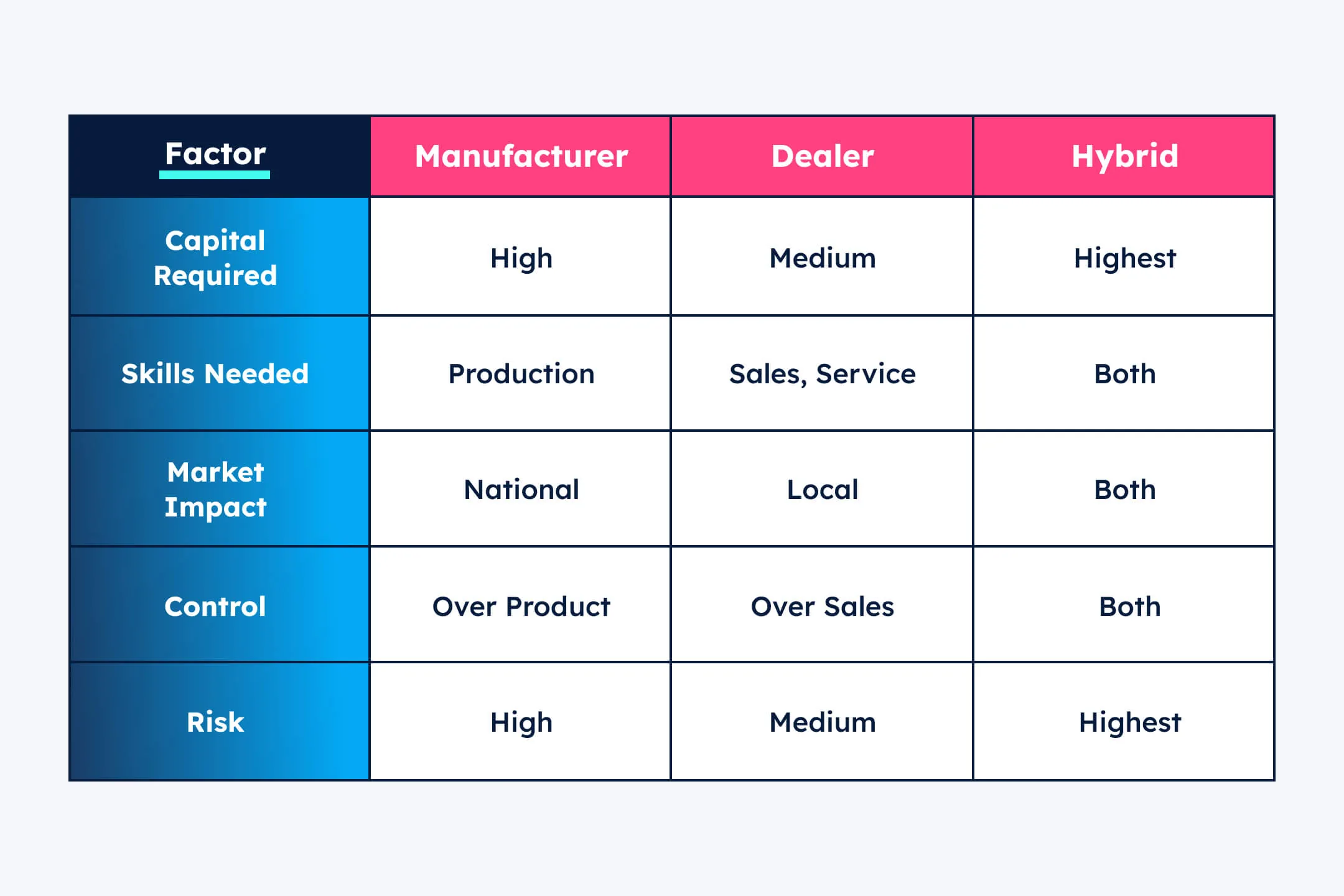
Comparison Table
Here is a comparison table to further clarify the differences between the roles:
Deciding your role in the shed industry isn't a decision to be made lightly. It involves careful consideration of your financial capacity, skills, understanding of the market, competitive landscape, and business goals. Whichever role you choose, remember that success in the shed business, like any other venture, comes from commitment, adaptability, and a keen understanding of customer needs.
Learning from real-life examples is an excellent way to gain insights and practical knowledge about the shed industry. Let's look at successful shed businesses that have adopted the manufacturer, dealer, and hybrid roles, and see what insights we can glean from their operations.
Manufacturer: ShedMaster
ShedMaster is a renowned shed manufacturer known for its custom, high-quality storage sheds and playhouses. They pride themselves on handling the entire production process, from design to manufacturing, ensuring top-notch quality. Their strong suit lies in offering a wide range of styles, sizes, and customization options to their customers.
Key takeaway: ShedMaster's success underlines the importance of offering a diverse product range and maintaining stringent quality control when you're a manufacturer. It also emphasizes the advantage of providing custom solutions to meet different customer needs.
Dealer: The Shed Place
The Shed Place is a successful dealer, focusing on providing a variety of ready-made and customizable sheds from different manufacturers. Their emphasis is on customer service and understanding customer needs to match them with the right product. They have a broad network of manufacturers, which allows them to offer a vast range of options to their customers.
Key takeaway: The Shed Place demonstrates that a dealer's success hinges on maintaining robust relationships with manufacturers and understanding customer needs deeply. They also show the benefits of offering a wide variety of products from different manufacturers to cater to diverse customer preferences.
Hybrid Role: Garden Spaces
Garden Spaces has taken on the hybrid role, controlling the entire process from design and manufacturing to sales. This approach allows them to create unique, high-quality garden rooms and offices that cater to a growing trend of home offices. By taking on both roles, they can quickly adapt to market trends and offer customized solutions.
Key takeaway: Garden Spaces showcases how a hybrid role can give you more control over product quality, design, and sales. Their ability to adapt to market trends quickly has been a significant factor in their success.
These examples show that there is no one-size-fits-all strategy in the shed industry. Each business has found success in its unique way by understanding its strengths, the market, and its customers' needs. As you contemplate your role in the industry, these insights can help guide your decision-making process.
Deciding between the roles of manufacturer, dealer, or taking on a hybrid role in the shed industry is a vital choice that shapes the trajectory of your business. In this guide, we've walked through each role, weighing their respective pros and cons, and the unique considerations that come with each.
Manufacturers have the benefit of total control over the product, but they also bear the brunt of high initial investment costs and operational complexities. Dealers, on the other hand, are relieved of production responsibilities but must navigate the intricacies of customer relationships and market demands.
Opting for a hybrid role offers the best of both worlds, combining the control of manufacturing with the customer proximity of dealing, but it also presents its own challenges, including managing a more extensive range of responsibilities.
We've also explored some real-world examples to show how these roles play out in practice. Each case offers valuable insights that can guide your decision-making process.
Remember, the role you choose is crucial, but it's not irrevocable. As your business grows and the market evolves, you may find it beneficial to switch roles or adopt a hybrid model. Stay flexible and open to change, and your business can thrive in the ever-dynamic shed industry.
Casey Wiggins ran a lot before he ran a shed factory. His playbook for turning a dealer from first contact into a partner who stays, and keeping them busy.
What a customer really costs, what a healthy return on ad spend looks like, where budget leaks, and how to show up when buyers ask AI instead of Google.
A $40M custom home builder on why he wins as the highest bid, and how shed dealers can sell their best models without cutting the price.
See how real shed businesses scale and simplify with Shed Suite.
See how Stor-Mor successfully scaled from manually tracking leads on spreadsheets to managing over 300 dealers.
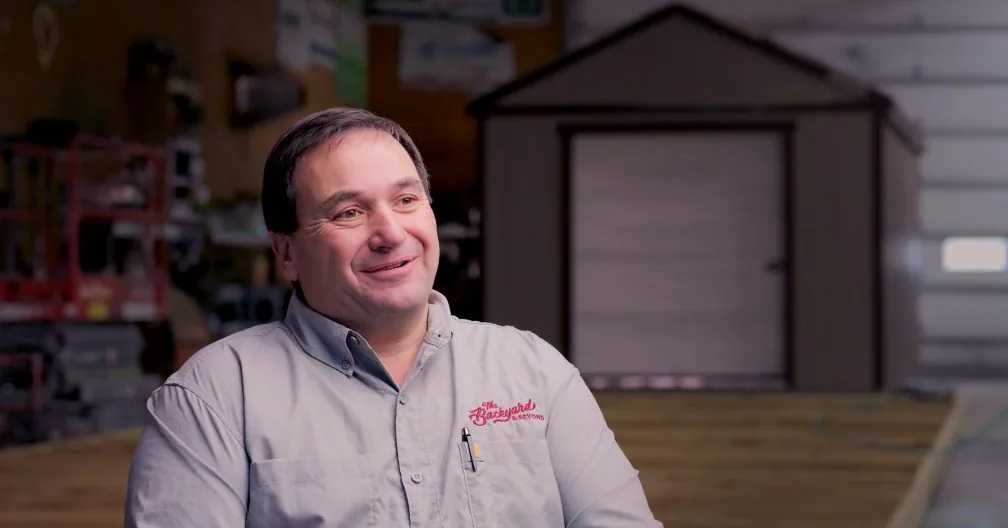
See how Backyard unified their e-commerce sales, inventory, and delivery teams using Shed Suite's all-in-one platform.
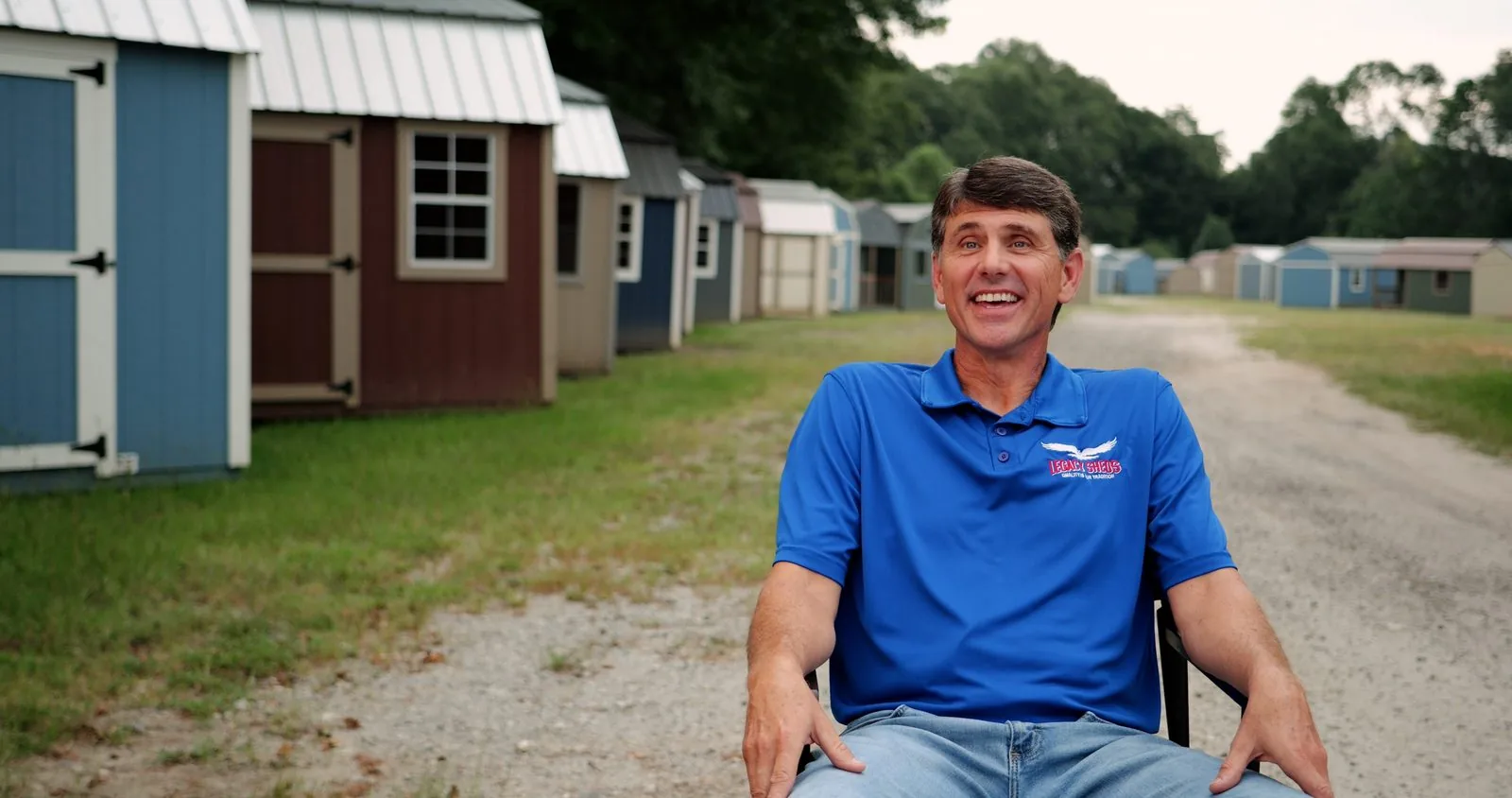
See how Legacy successfully automated sales, simplified inventory management, and improved delivery tracking to scale seamlessly.
See how Westwood Sheds replaced spreadsheets and PDF order forms with Shed Suite, then grew to 11 sales locations across two states.
See how Liberty Sheds put sales, production, customer success, and dispatch on one system. Now they close sales remotely and reconcile inventory by running a report.
Shed Suite clients see an average growth of 81% in their first year.
See how we do it — book a 30-minute demo.
Average sales growth across all Shed Suite clients, the 12 months before vs. after joining Shed Suite. As of 2026.
“We come from the shed industry and built this for y’all. We’d love to show you what we do, how it works, and how it’ll make every team member’s life so much easier and smoother.”

Jason Graber
Shed Suite Founder